

OUR APPROACH
HOW WE DESIGN LEARNING
We combine educational insight, emerging technologies, interdisciplinary design, and real-world practice to create learning experiences that are relevant, adaptable, and deeply human.
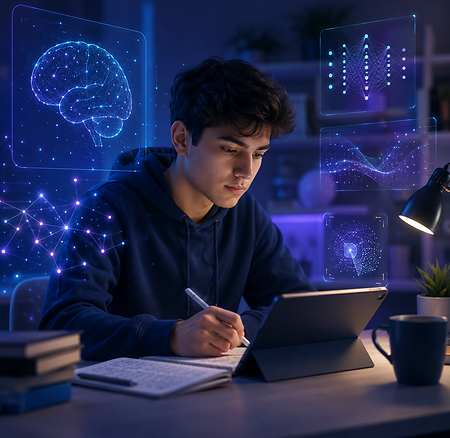
MORE THAN NEW TOOLS
Artificial intelligence is changing more than how information is accessed. It is reshaping how people create, communicate, make decisions, and solve problems.
We believe education must respond by developing both technical fluency and distinctly human capabilities: curiosity, judgment, creativity, collaboration, adaptability, and the ability to connect knowledge across contexts.
INTERDISCIPLINARY BY DESIGN
Real-world challenges rarely belong to a single subject. We connect knowledge, methods, and perspectives across disciplines to help learners build a more integrated understanding of the world.
PROJECT-BASED AND ACTIVE
Learners investigate questions, test ideas, make decisions, collaborate with others, and create meaningful outcomes rather than passively receive information.
AI-ENHANCED, HUMAN-CENTERED
We use AI and emerging technologies to expand exploration, feedback, and creation while preserving human agency, judgment, originality, and connection.
RESPONSIVE TO CONTEXT
Every learner and institution is different. We design programs around specific goals, ages, environments, cultures, and available resources rather than applying one fixed model.
OUR DESIGN PRINCIPLES
FROM KNOWLEDGE TO CAPABILITY
Knowledge remains essential. But meaningful learning also requires the ability to question, connect, apply, and communicate what one knows.
Our programs are designed to help learners develop capabilities they can transfer across subjects, projects, and real-world situations.
AI & Technical Literacy
Understanding and using emerging technologies thoughtfully and responsibly.
Interdisciplinary Thinking
Connecting ideas and approaches across traditional subject boundaries.
Creativity
Generating, developing, and refining original ideas.
Communication
Expressing complex ideas clearly across different formats and audiences.
Collaboration
Working effectively with others through shared goals and diverse perspectives.
Real-World Problem Solving
Applying knowledge, judgment, and experimentation to unfamiliar challenges.

